
Liquid Soil for civil engineering, pipeline construction, and sewer construction
Get to know us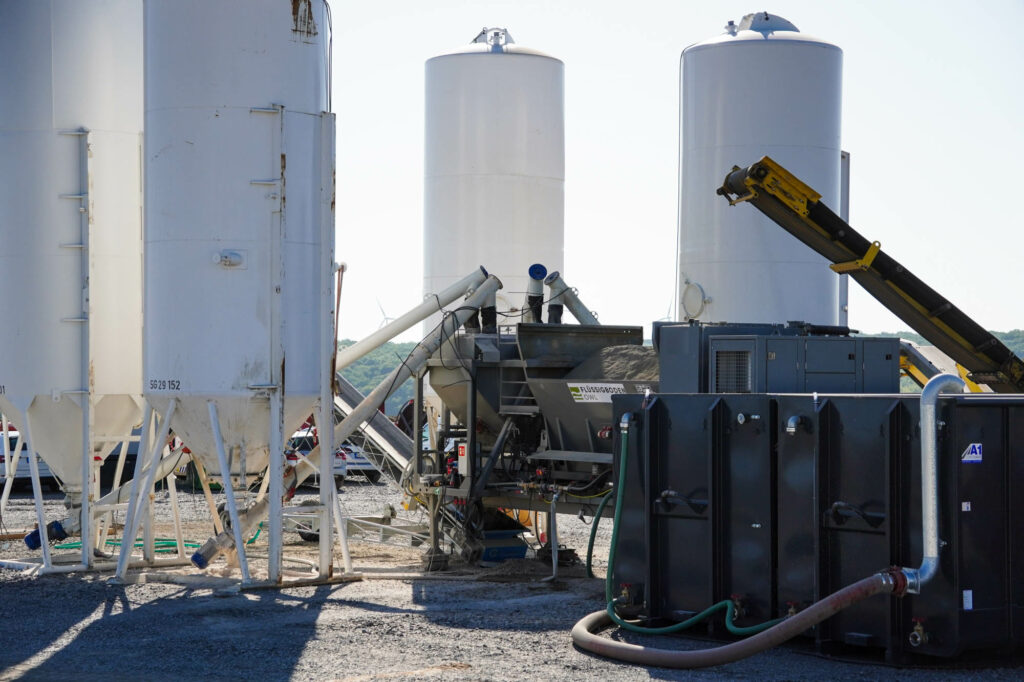
Liquid flooring for construction projects throughout Germany
We develop the right liquid soil mixture for every construction project and produce it directly on-site. This results in low-settlement backfill for pipeline construction, sewer construction, and excavation pits, while existing excavated soil can be reused in a resource-efficient manner.

Sustainable Civil Engineering Through the Reuse of Excavated Soil
A major advantage of liquid soil is the reuse of the existing excavated soil. Instead of disposing of the soil—a costly and labor-intensive process—it is processed directly on the construction site and reused as liquid soil for backfilling.
This significantly reduces transportation distances, CO₂ emissions, and disposal costs. At the same time, it creates a resource-efficient material cycle that conserves natural raw materials and makes construction projects more cost-effective. In this way, liquid soil combines technical performance with sustainable civil engineering and the efficient use of existing materials.
Your Partner for Liquid Soil in Civil Engineering
Flüssigboden OWL supports construction companies, planners, and local governments from the initial consultation through to the final backfill. We develop project-specific liquid soil formulations, produce the liquid soil directly on the construction site, and, upon request, also handle the professional installation.
With our state-of-the-art machinery, we achieve production rates of up to 100 m³ per hour and can reliably meet a wide variety of requirements in pipeline construction, sewer construction, excavation work, and other civil engineering projects.
Reusing existing excavated soil creates cost-effective and sustainable solutions that conserve resources, reduce transportation distances, and enable efficient construction site operations.
From planning to installation— everything from a single source

Planning
We advise you as early as the planning phase and develop the right fluidized soil solution for your construction project—tailored to your specific soil conditions and requirements.

Production
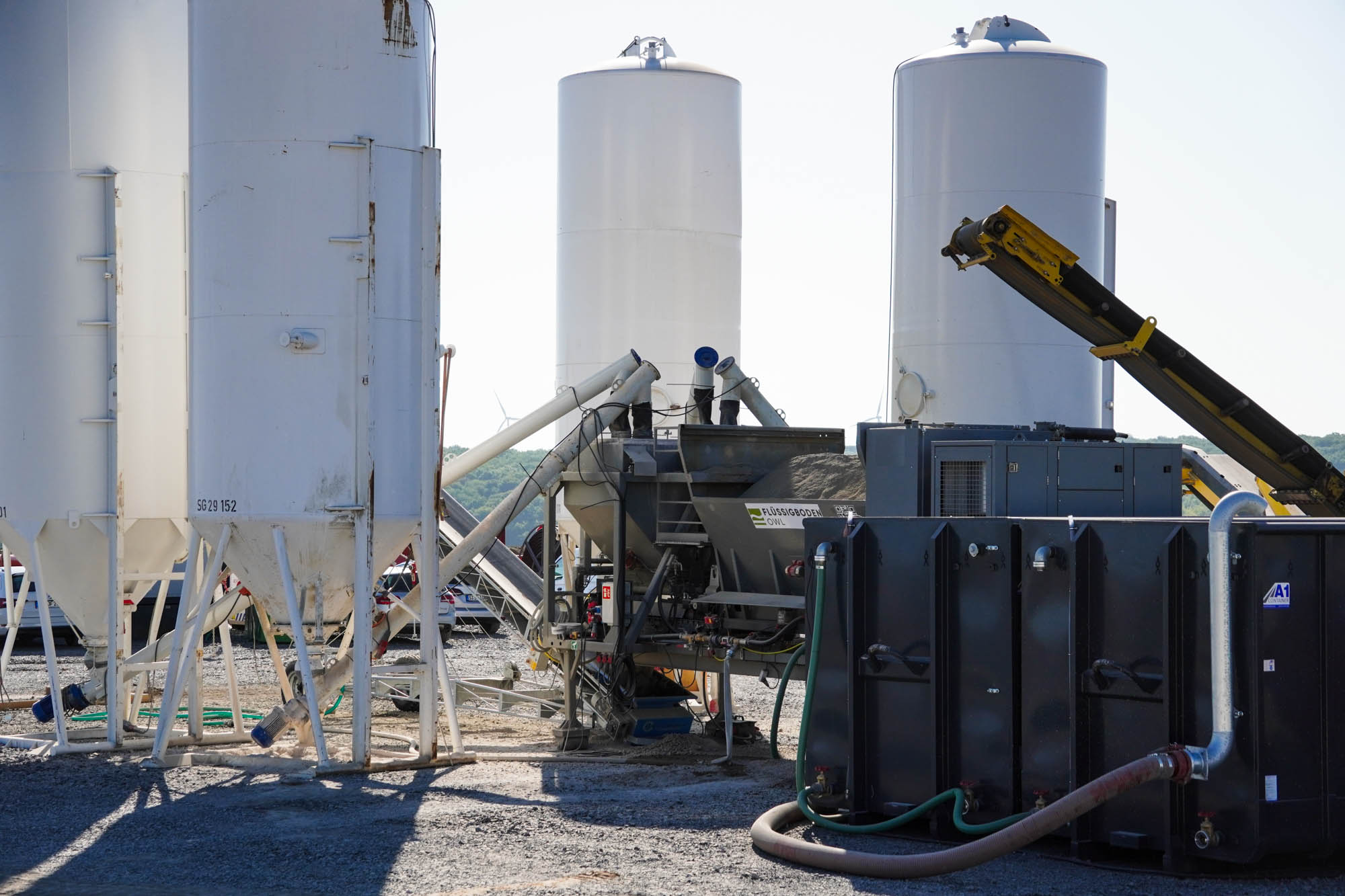
Using our mobile mixing plants, we produce liquid soil directly on the construction site. This allows us to minimize transport distances and achieve production rates of up to 100 m³ per hour.

Installation
Our experienced team handles the professional installation of the liquid floor—even in cases involving complex excavation pits, utility trenches, and challenging civil engineering projects.

Quality Assurance
From formulation development to documentation, we support your project with comprehensive quality assurance and ensure consistently high material quality.
Developed from real-world civil engineering experience
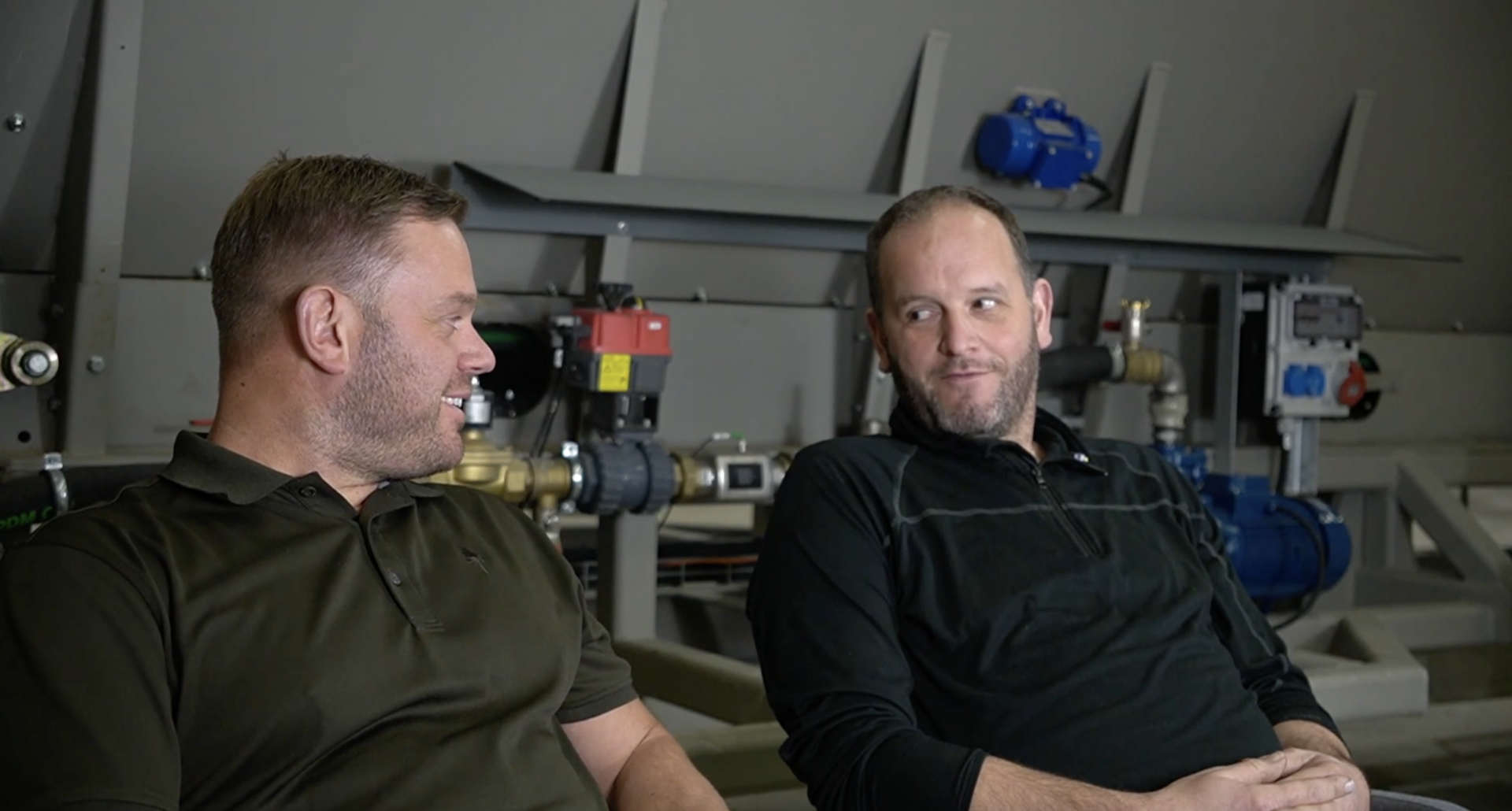
Flüssigboden OWL was founded with the goal of providing construction companies, planners, and municipalities with a sustainable and cost-effective solution for civil engineering projects. Born out of day-to-day construction site experience, the company now supports projects throughout Germany with custom-developed liquid soil solutions—from planning and production to installation.
The Benefits of Liquid Flooring at a Glance
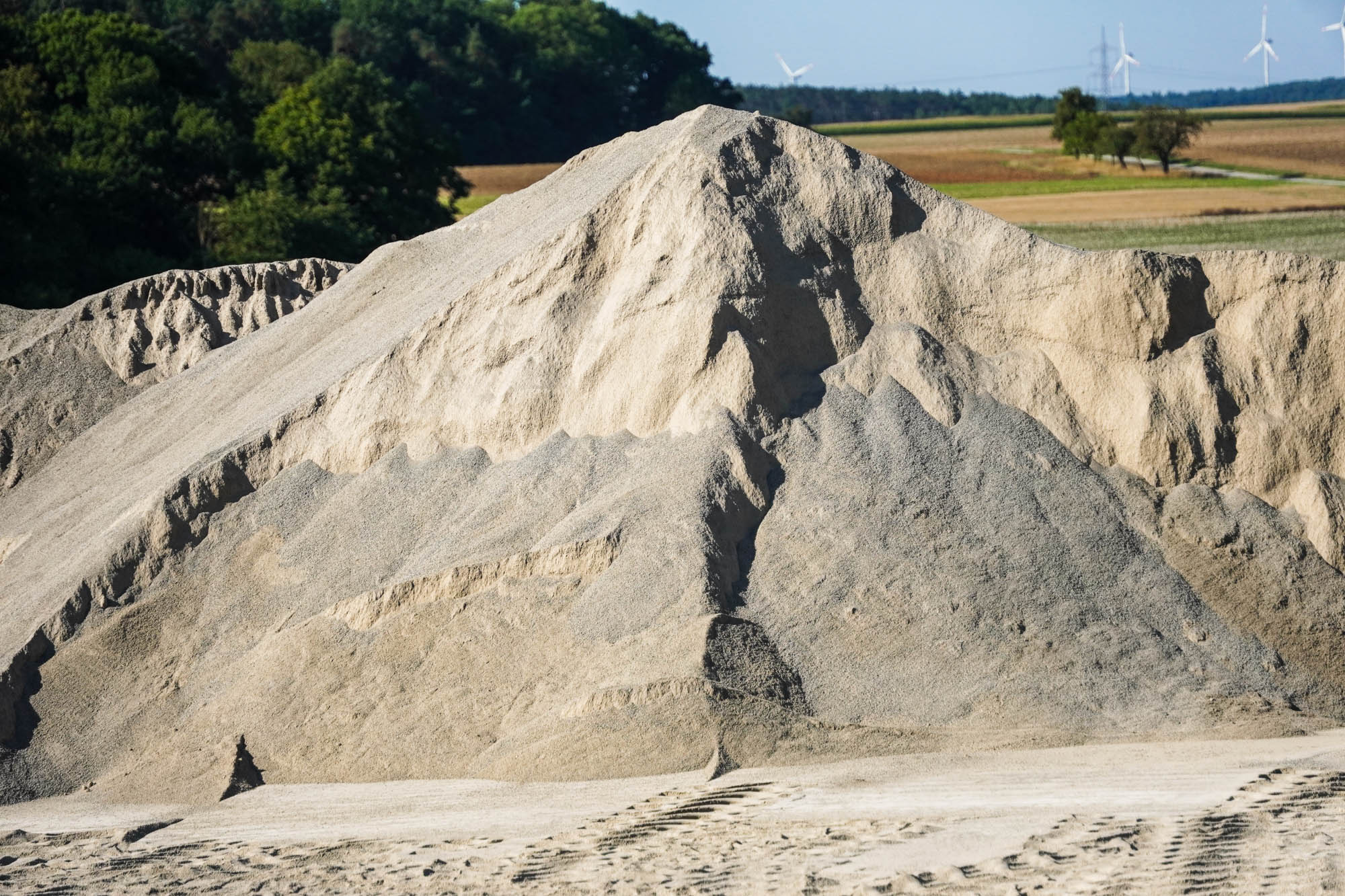
Compared to traditional backfilling methods, liquid soil offers numerous technical, economic, and environmental advantages. Thanks to its flowable properties, it ensures safe backfilling, more efficient construction processes, and the sustainable reuse of excavated soil.
- Low-Settlement Backfill
Homogeneous backfill without voids and with a low risk of settlement. - Optimal Protection for Cables
Cables and pipes are evenly encased and protected from localized stress. - Reusing Excavated Soil
Existing soil is processed and reused—instead of being disposed of. - Faster Construction Processes
The flowable installation reduces the need for compaction and saves time on the construction site. - Lower transportation and disposal costs
Fewer material shipments and smaller disposal volumes reduce project costs. - Sustainable Civil Engineering
Lower CO₂ emissions and a resource-efficient material cycle support sustainable construction.
Modern mixing system technology for efficient liquid slurry
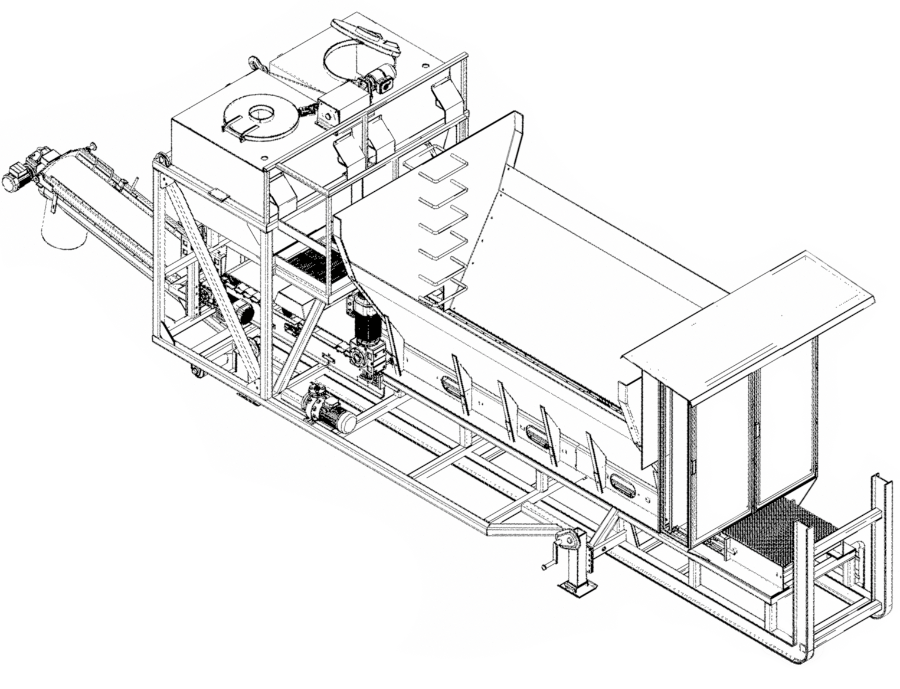
Using our state-of-the-art liquid soil mixing plants, we produce liquid soil directly on the construction site—tailored to the specific soil conditions and project requirements. This eliminates the need for long transport distances, speeds up construction processes, and ensures consistently high material quality.
Our plant technology achieves production rates of up to 100 m³ per hour and is suitable for a wide variety of applications in pipeline construction, sewer construction, and civil engineering. Thanks to digitally monitored production processes, formulations can be monitored and optimized at any time. This enables us to ensure reliable, cost-effective, and reproducible production of liquid soil—right where it’s needed.
Applications of Liquid Soil in Civil Engineering
Utility Line Construction
Liquid soil is ideal for backfilling utility trenches as well as utility lines and pipelines. It evenly coats the lines, reduces voids, and ensures a permanently stable bedding.
Canal Construction
In sewer construction, liquid soil enables the uniform backfilling of sewers, manholes, and drainage systems. Even hard-to-reach areas are backfilled reliably and with minimal settlement.
Excavations
For excavation pits and work areas, liquid soil provides a low-settlement, uniform backfill. This speeds up construction processes and reduces the need for compaction work.
District heating pipes
Liquid soil is suitable for embedding and backfilling district heating pipes. Custom formulations can be tailored to meet requirements such as thermal conductivity and stability.
Cable Trays
For power lines, fiber-optic cables, and utility corridors, liquid soil permanently protects cables from localized stress and allows for quick, even backfilling.
Pollutant Removal
Thanks to specially developed formulations, liquid soil can help stabilize contaminated soil. At the same time, the reuse of existing excavated soil enables a sustainable and resource-efficient construction method.
Frequently Asked Questions About Liquid Soil
Liquid soil is a backfill material that is temporarily flowable and is produced from excavated soil, water, binders, and additives. It is particularly suitable for backfilling in civil engineering, pipeline construction, and sewer construction.
Liquid soil is used, among other things, in utility trenches, piping, excavation pits, sewer construction, district heating lines, cable routes, and work areas. It ensures void-free backfill with minimal settlement.
In pipeline construction, liquid soil evenly envelops pipes and cables. This results in fewer voids, provides reliable protection for the pipes and cables, and eliminates the need for time-consuming compaction work. At the same time, it speeds up construction processes and reduces settlement.
Yes. Depending on the soil type and the construction project, existing excavated soil can be processed and reused as liquid soil. This reduces transportation, disposal costs, and the need for new backfill material. At the same time, it conserves natural resources.
Yes. Liquid soil is ideal for backfilling construction pits, work areas, and other hard-to-reach areas. The material spreads out on its own, reduces voids, and ensures even load distribution.
Under certain conditions, it is possible to determine whether contaminated excavated soil can be treated with a project-specific liquid soil formulation and reused. Suitability is verified through soil analyses and laboratory tests.
Yes. Flüssigboden OWL produces liquid soil using mobile mixing plants directly on the construction site. Each formula is individually tailored to the soil type, installation conditions, and the technical requirements of the project. This results in short transport distances and consistently high quality.
Yes. Liquid soil generally remains excavatable. This means that pipes or structures can be exposed even years later without the need for extensive demolition work. This makes liquid soil particularly cost-effective for pipeline and sewer construction.